
September 9, 2025
The Apple Watch Series 11 represents an iterative, yet significant, engineering update to the company’s established smartwatch platform. While retaining the S10 processing chip from the previous generation, this release prioritizes advancements in materials science, power management, and biometric sensor capabilities, delivering a technically refined user instrument.
Case Architecture and Dimensions
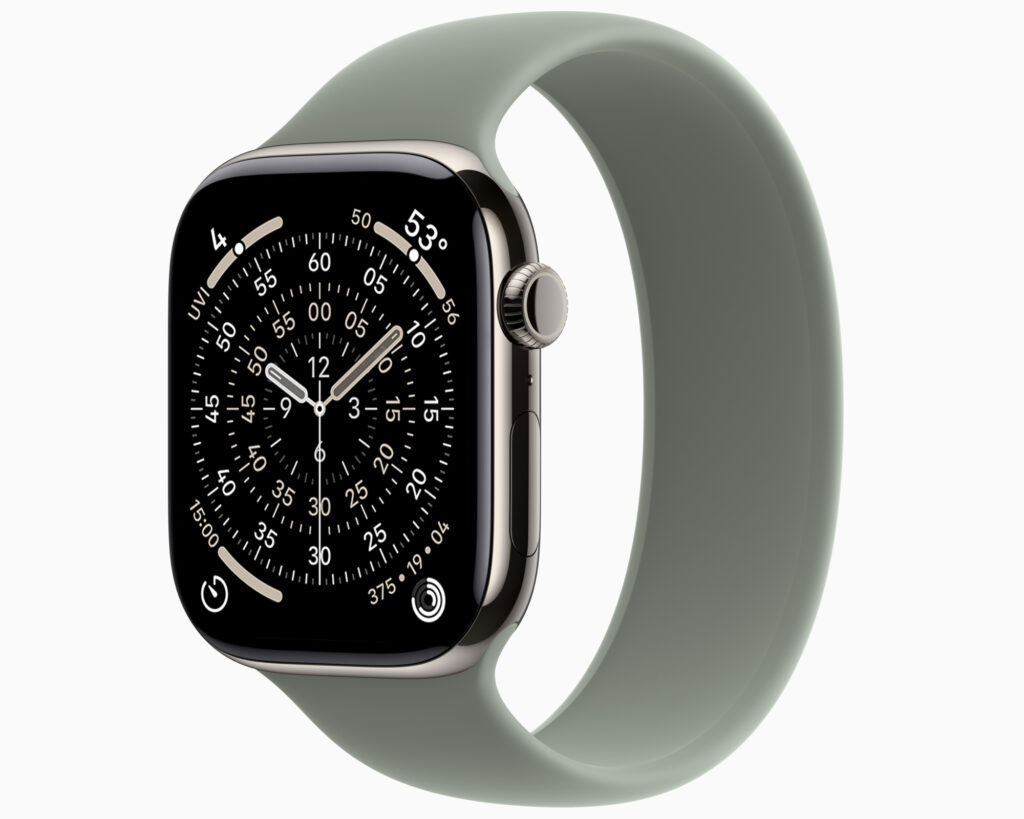
The Series 11 is offered in two distinct material classes: aluminum and titanium. The case dimensions are maintained in two vertical profiles, 42mm and 46mm, which correspond to case widths of 36mm and 39mm respectively. A consistent thickness of 9.7mm across all models demonstrates a continued focus on a streamlined physical footprint. The digital crown and single-button interface remain the primary physical controls, integrated into a chassis that houses a large multi-purpose sensor array on its caseback. The precise finishing varies by material, with the titanium models offered in Gold, Natural, and Slate, and aluminum in Rose Gold, Silver, Space Gray, and Jet Black.
Engineering and Sensor Advancement
A key technical upgrade is found in the device’s power efficiency. Despite utilizing the S10 chip, engineering enhancements have extended the standard battery life to a full 24 hours, with a low-power mode capable of 38 hours. This increased endurance is crucial for supporting the new functionalities within WatchOS 26. The most notable advancement is the integration of high blood pressure (hypertension) tracking, which represents a significant leap in wrist-sensor technology. This new capability builds upon the existing heart rate, temperature, and sleep analysis functions, providing a more comprehensive biometric data suite.
Material Science and Durability
Apple has implemented material-specific upgrades to enhance durability. The titanium models continue to feature a sapphire glass crystal for maximum scratch resistance. However, the aluminum models receive a noteworthy improvement with their Ion-X glass, which is now bonded with a ceramic surface coating. This process doubles the scratch resistance compared to the glass on the Series 10. All Series 11 models maintain a water resistance rating of 50 meters, certifying them as suitable for swimming and other surface water activities.
In conclusion, the Apple Watch Series 11’s value proposition is rooted in tangible engineering improvements. The enhanced durability of its display materials, superior power management, and the groundbreaking addition of hypertension monitoring make it a more robust and capable technical device for data-driven users.
#AppleWatch #Series11 #WearableTech #Smartwatch #TechSpecs #WatchOS26 #Engineering #Biometrics